
Introduction
Service account shell Ubuntu is covered in this complete practical tutorial. Configuring shell access for service accounts on Ubuntu involves establishing secure, controlled environments where automated processes or background services operate under dedicated identities. This practice is critical for system administration as it enforces least-privilege principles, isolates potential security risks, and ensures auditability. A service account is a non-human user account designed to run specific tasks or services without requiring interactive login.
By limiting shell access to these accounts, administrators can prevent unauthorized actions, monitor activity through logs, and maintain compliance with security policies. The focus keyword “service account shell Ubuntu” encapsulates this concept, emphasizing the integration of service account management with shell environment configuration on Ubuntu systems.
Version note: These instructions target 7. Package versions and repository behavior may change in later releases, so verify upstream documentation before applying production changes.
What You’ll Learn
This guide explains Service account shell Ubuntu with clear, reproducible administration steps.
This guide covers the process of setting up shell access for service accounts on Ubuntu. You will learn how to create and manage service accounts, configure their shell environments, verify proper operation, troubleshoot common issues, and apply security best practices. Key topics include understanding service lifecycle management, implementing least-privilege permissions, and using system tools for verification and rollback. By the end, you will be able to deploy and maintain service accounts with confidence, ensuring they align with security and operational requirements.
Prerequisites
Before you begin Service account shell Ubuntu, confirm the following prerequisites.
Before proceeding, ensure you have the following:
– A running Ubuntu system (preferably 22.04 LTS or later).
– Sudo privileges to execute administrative commands.
– Basic familiarity with the command line and text editing tools like nano or vim.
– Knowledge of systemd service management and journalctl for logging.
– Understanding of user and group permissions in Linux.
This tutorial assumes you are working in a non-production environment or a controlled test setup to avoid unintended consequences.
Lab Environment
The lab environment used to demonstrate Service account shell Ubuntu is summarized below.
The lab environment should include a dedicated Ubuntu server or virtual machine. Ensure the following tools are installed:
– sudo for privilege escalation.
– systemd for service management.
– journalctl for log inspection.
– text editor (e.g., nano) for configuration files.
– basic networking tools (e.g., ping, ssh).
Avoid using production systems for testing. If using a cloud instance, ensure it has sufficient resources for service account operations.
Installation
Service account shell Ubuntu
This section covers the installation of necessary packages and tools. While most Ubuntu systems come with required utilities pre-installed, verify their presence:
sudo apt update
sudo apt install sudo systemd journalctl
Review the command output before continuing, and confirm that it completed without errors.
The sudo package enables non-root users to execute commands with elevated privileges. systemd manages services, and journalctl provides access to system logs. No additional packages are required for basic service account shell configuration. Ensure your package repository is up-to-date to avoid version mismatches.
Alternative Installation and Package Sources
Compare the distribution-supported package with the project’s official repository or installation method. Choose one source, document it, and avoid mixing package origins.
Before changing package sources, record the current package version and repository origin. This makes troubleshooting and rollback more predictable.
Expert Architecture Notes
Experienced administrators define service boundaries before tuning individual settings.
- Treat APT sources, packages, services, kernel, and bootloader as one managed dependency graph.
- Separate routine updates from release upgrades and document third-party repositories.
Record the package source and installed version used for Service account shell Ubuntu so future maintenance remains reproducible.
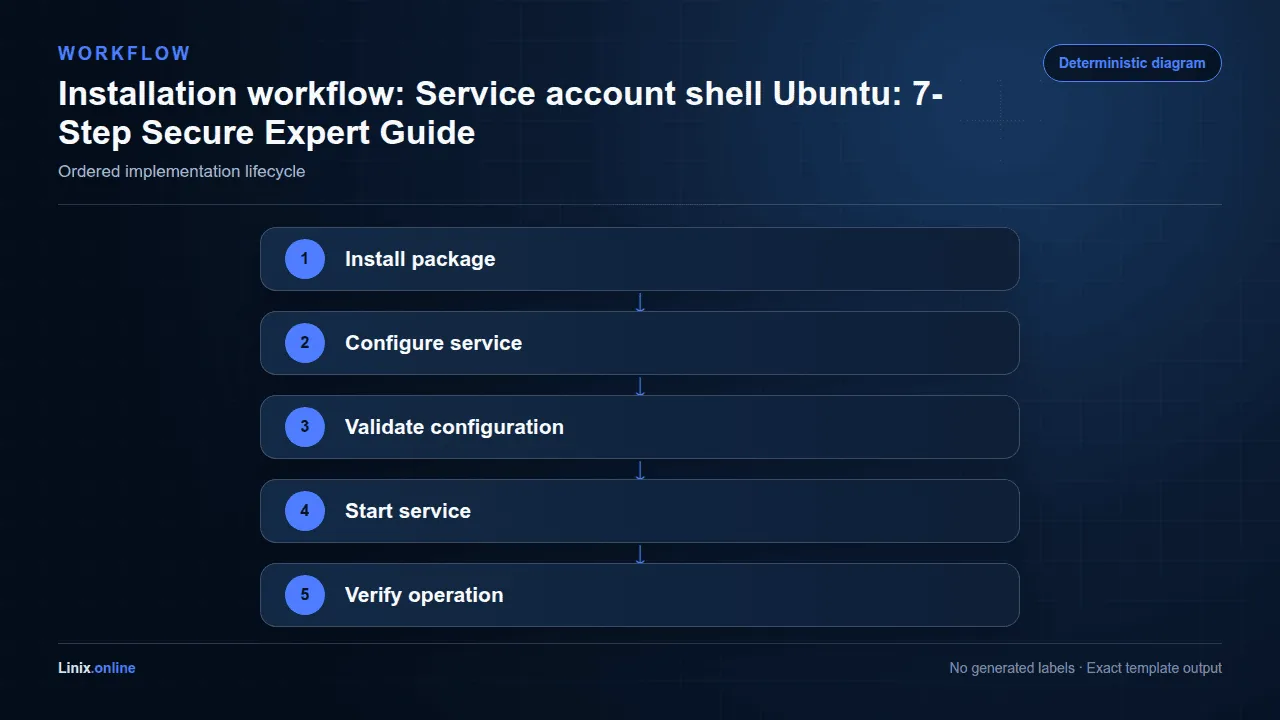
Figure 2. Installation workflow for Service account shell Ubuntu: 7-Step Secure Expert Guide.
Configuration
After the initial setup, Service account shell Ubuntu requires the following configuration checks.
Configuring shell access for service accounts involves creating the account, setting permissions, and defining service-specific settings. Follow these steps:
- Create the service account: Use
sudo useraddto create a dedicated user. For example:sudo useradd -m -s /bin/bash service_accountReview the command output before continuing, and confirm that it completed without errors.
This creates a user named service_account with a home directory and /bin/bash as the default shell.
- Set shell access: Modify the shell path if needed. For restricted access, use
/bin/shinstead of /bin/bash. Edit the user’s shell with:sudo usermod -s /bin/sh service_accountReview the command output before continuing, and confirm that it completed without errors.
This limits the account to a minimal shell environment.
- Assign least-privilege permissions: Add the user to a specific group or grant sudo access only for required commands. For example:
sudo usermod -aG admin_group service_account
sudo visudo
# Add line: service_account ALL=(ALL) NOPASSWD: /usr/bin/service command
Review the command output before continuing, and confirm that it completed without errors.
This ensures the account can only execute specific commands without a password.
- Configure service unit files: If the service account runs a systemd service, edit the unit file using
systemctl editto avoid modifying vendor files directly. For example:sudo systemctl edit my_service.serviceReview the command output before continuing, and confirm that it completed without errors.
This creates a local override file for the service configuration.
Ensure all changes are tested in a non-production environment before deployment.
Configuration and File Reference
| Item | Purpose |
|---|---|
/etc/shell/ | Configuration or persistent data location to back up and review before changes. |
/var/log/shell/ | Primary log location or log directory used during diagnosis. |
Paths can vary by distribution and installation method. Confirm each path on the target host before editing or automating it.
Upgrade and Maintenance Workflow
Use a staged maintenance process: capture the current version, back up configuration and data, review available packages, apply the update, and complete the same verification checks used after installation.
sudo apt update
sudo apt install --only-upgrade shell
Run upgrade commands during a maintenance window. Review package changes before confirmation, then verify the service, logs, listening ports, and application behavior.
Expert Performance Guidance
Performance changes should follow measurement, not assumptions.
- Measure boot time, memory pressure, disk latency, and service startup before changing kernel or sysctl settings.
- Keep /boot and root filesystem capacity monitored before large upgrades.
Monitor the signals that prove whether the change helped or introduced risk.
- Monitor failed systemd units, pending reboots, disk space, and security updates.
Verification
For upstream details and current platform guidance, consult the Ubuntu Server documentation.
Use these checks to verify that the service environment completed successfully.
Verify the configuration by checking service status, user permissions, and logs:
- Check service status: Use
systemctl statusto confirm the service is active:systemctl status my_service.serviceReview the command output before continuing, and confirm that it completed without errors.
A successful output will show active (running) or active (waiting) depending on the service state.
- Inspect user shell: Verify the shell path with:
id service_accountReview the command output before continuing, and confirm that it completed without errors.
The output should reflect the configured shell (e.g., /bin/sh).
- Review logs: Use
journalctl -u my_service.serviceto check for errors or unexpected behavior. Look for entries related to the service account’s actions. - Test access: Log in as the service account (if permitted) and run a simple command to confirm shell functionality:
sudo -u service_account /bin/sh -c "echo 'Test'"Review the command output before continuing, and confirm that it completed without errors.
This ensures the account can execute commands as expected.
Observables include successful service startup, correct shell path, and absence of permission errors in logs.
Troubleshooting
If the Linux setup does not work as expected, review these common causes.
Common issues and their resolutions:
- Service not starting: Check the service unit file for syntax errors using
systemctl daemon-reloadandjournalctl -u my_service.service. Ensure the service account has execute permissions on required scripts. - Permission denied errors: Verify the service account’s sudo rules or group memberships. Use
visudo -cto validate sudo configurations. - Incorrect shell path: Confirm the shell is set with
id service_account. If incorrect, adjust withusermodand restart the service. - Log access issues: Ensure the service account has read access to log files. Use
ls -l /var/log/journalto check permissions.
Rollback steps include reverting the service unit file with systemctl edit --rollback my_service.service or restoring the user configuration with usermod --shell /bin/bash service_account.
Logs and Diagnostic Commands
When the service behaves unexpectedly, collect evidence before changing configuration. The following commands establish the installed version, service state, recent errors, and application-level health.
shell --version
systemctl status shell --no-pager
journalctl -u shell -n 100 --no-pager
journalctl -u shell --since '30 minutes ago'
systemctl status shell --no-pager
Save the relevant output with timestamps. Compare the first error with later secondary failures, because the earliest failure usually identifies the root cause.
Rollback and Uninstall Strategy
A rollback should restore both configuration and compatible application data. Do not remove data directories until backups have been verified and the retention decision is documented.
sudo cp -a /etc/shell /etc/shell.backup
sudo systemctl restart shell
sudo apt remove shell
Package removal does not always delete configuration or persistent data. Inspect the package manager output, verify backups, and confirm whether a purge is appropriate before deleting retained files.
Automation and Routine Health Checks
Automate read-only health checks before automating changes. A scheduled check should report a failure without repeatedly restarting services or hiding the original error.
systemctl is-active shell
journalctl -u shell -n 20 --no-pager
For fleet management, place the same checks in Ansible, a monitoring agent, or a systemd timer. Keep credentials outside scripts and make maintenance jobs idempotent.
Common Production Failure Modes
| Expert concern | Operational guidance |
|---|---|
| Repository drift | PPAs can replace distribution packages and block upgrades. |
| Kernel regression | A new kernel may fail with storage, network, or DKMS modules. |
| Partial dpkg transaction | Interrupted package operations can leave packages unconfigured. |
Security Best Practices
Apply these security controls after the procedure is complete.
Implement these measures to harden service account configurations:
- Least-privilege permissions: Restrict the service account to only necessary commands and groups. Avoid granting broad sudo access.
- No world-writable files: Set home directories and configuration files to 700 permissions (owner only). Use
chmod 700 /home/service_account. - Audit logging: Enable
journalctlandauditdto track service account actions. For example:sudo auditctl -w /home/service_account -p wa -k service_account_auditReview the command output before continuing, and confirm that it completed without errors.
This logs file access and modifications.
- Secret handling: Never store passwords or sensitive data in shell history or logs. Use environment variables or secure secret stores for sensitive operations.
- Regular reviews: Periodically audit service accounts using
id,groups, andsudo -lto ensure they remain compliant.
These practices align with the “Linux-security-hardening-core” profile, emphasizing auditability and least privilege.
Production Readiness Checklist
- Back up configuration and application data before changes.
- Validate configuration before restarting or reloading the service.
- Monitor logs, disk usage, resource consumption, and service availability.
- Document rollback steps and test them outside production.
Record the tested version, configuration checksum, backup location, validation commands, and rollback owner in the change record before production rollout.
Expert Hardening Guidance
Apply controls in layers and verify that security changes do not break required service behavior.
- Use unattended-upgrades with monitoring and an explicit reboot policy.
- Prefer AppArmor profiles, least-privilege sudo rules, and minimal exposed services.
Avoid these common operational anti-patterns.
- Do not mix multiple repositories for the same core package without pinning.
Expert Recovery Strategy
Recovery planning must cover configuration, persistent state, dependencies, and the order in which services return.
- Retain previous kernels and console access.
- Save package selections, APT sources, and configuration backups before high-risk changes.
Automate repeatable checks and changes without hiding failures.
- Use cloud-init or Ansible for repeatable host configuration.
Frequently Asked Questions
What should I verify after this configuration?
Confirm the service, version, logs, network access, and security settings described above.
Why use a service account instead of a regular user?
A service account is designed for non-interactive tasks, reducing the attack surface. Regular users have broader permissions, which can be exploited if compromised. Service accounts enforce least privilege and are easier to audit.
How do I restrict shell access for a service account?
Use usermod to set the shell to /bin/sh or a restricted shell. Additionally, configure sudo rules to limit executable commands. Avoid granting full shell access unless necessary.
What if the service fails to start after configuration?
Check the service unit file with systemctl edit for syntax errors. Review journalctl logs for specific error messages. Ensure the service account has correct permissions on required files or directories.
Can I use a different shell for the service account?
Yes, but it must be a minimal shell like /bin/sh. Avoid interactive shells like /bin/bash unless required, as they increase security risks.
How do I verify the service account’s permissions?
Use id service_account to check group memberships and sudo -l to review sudo privileges. Ensure the account has only the necessary access.
What rollback steps should I take if a configuration fails?
Revert the service unit file with systemctl edit --rollback or restore the user configuration with usermod. Always maintain backups of critical files before making changes.
Conclusion
Configuring shell access for service accounts on Ubuntu is a fundamental aspect of system administration that balances functionality with security. By following the steps outlined in this tutorial, you can create isolated, least-privilege environments for automated services. Key practices include using systemd for service management, enforcing strict permissions, and maintaining audit trails. The focus keyword “the deployment” highlights the integration of these concepts, ensuring your systems remain secure and efficient.
Regular verification and troubleshooting will help maintain reliability, while security best practices mitigate risks. This approach aligns with modern Linux security standards and supports scalable, maintainable infrastructure.
Related Tutorials
Need help? If you run into issues while following this guide, leave a comment with the command output and your Linux version.