
Introduction
Disable cloud-init Ubuntu is covered in this complete practical tutorial. Disabling Cloud-Init safely on a persistent server involves removing or configuring the Cloud-Init service to prevent it from executing during boot or runtime. Cloud-Init is a tool commonly used in cloud environments to automate initial setup tasks, such as installing software or configuring network settings. However, on a persistent server—designed for long-term, stable operations—Cloud-Init can introduce unnecessary overhead, security risks, or unintended configurations.
This guide focuses on the Ubuntu distribution, addressing the specific requirements to disable Cloud-Init while maintaining system integrity and security. The focus keyword “disable cloud-init Ubuntu” is central to this process, ensuring the steps are tailored to Ubuntu’s package management and service control mechanisms.
Version note: These instructions target 7. Package versions and repository behavior may change in later releases, so verify upstream documentation before applying production changes.
What You’ll Learn
This guide explains Disable cloud-init Ubuntu with clear, reproducible administration steps.
- Understand the role of Cloud-Init in cloud and persistent server environments.
- Learn how to safely disable Cloud-Init without disrupting critical system services.
- Verify successful disabling through observable system logs and service status checks.
- Identify common failure modes and their resolution paths.
- Apply security best practices to ensure least privilege and auditability during the process.
Prerequisites
To follow this tutorial, you must have:
- A persistent Ubuntu server (preferably 22.04 or 24.04 LTS).
- Basic familiarity with the terminal and command-line tools.
- Sudo access to execute administrative commands.
- Knowledge of systemd service management.
The focus keyword “disable cloud-init Ubuntu” assumes prior knowledge of Ubuntu’s package and service management. No advanced Linux expertise is required, but understanding of system services is essential.
Lab Environment
This tutorial requires a controlled environment to test the steps without risking production systems. The lab environment should include:
- A dedicated Ubuntu server instance (not a cloud VM).
- Access to a terminal with sudo privileges.
- Tools like
systemctl,dpkg, andjournalctlinstalled.
The focus keyword “disable cloud-init Ubuntu” implies that the lab environment must use Ubuntu’s native package management and service control tools. No container or virtualization tools are required unless explicitly stated, which they are not in this case.
Installation
Disable cloud-init Ubuntu
Cloud-Init is typically pre-installed on Ubuntu systems, especially those deployed via cloud providers. However, if it is not present, you can install it using the following command:
sudo apt update
sudo apt install cloud-init
Review the command output before continuing, and confirm that it completed without errors.
For the focus keyword “disable cloud-init Ubuntu,” it is critical to verify that Cloud-Init is installed from a trusted repository. Ubuntu’s default repositories are signed and verified, ensuring package provenance. Always use apt with update before installation to ensure the latest package versions. Avoid third-party repositories unless necessary, as they may compromise security or stability.
Alternative Installation and Package Sources
Compare the distribution-supported package with the project’s official repository or installation method. Choose one source, document it, and avoid mixing package origins.
Before changing package sources, record the current package version and repository origin. This makes troubleshooting and rollback more predictable.
Expert Architecture Notes
Shared foundations for VM lifecycle, templates, snapshots, backups, resource isolation, and operational recovery. Shared cloud infrastructure guidance for images, metadata, bootstrap, lifecycle, immutable provisioning, and template hygiene. Cloud-Init provides production virtualization and cloud infrastructure guidance for deployment, lifecycle, networking, storage, security, monitoring, and recovery.
Experienced administrators define service boundaries before tuning individual settings.
- Separate management, compute, network, storage, identity, backup, and observability boundaries.
- Treat definitions, images, metadata, and recovery procedures as versioned production assets.
- Separate Cloud-Init management, compute, network, storage, image, and recovery boundaries.
- Keep definitions and provisioning inputs declarative and reviewable.
- Treat APT sources, packages, services, kernel, and bootloader as one managed dependency graph.
- Separate routine updates from release upgrades and document third-party repositories.
Request and Component Flow
- Capacity Plan
- Validated Definition
- Provisioning
- Runtime
- Monitoring
- Backup and Recovery
- Prerequisite Validation
- Image or Definition
Virtualization Core Architecture Flow
Capacity Plan
  ↓
Validated Definition
  ↓
Provisioning
  ↓
Runtime
  ↓
Monitoring
  ↓
Backup and Recovery
Cloud Infrastructure Core Architecture Flow
Capacity Plan
  ↓
Validated Definition
  ↓
Provisioning
  ↓
Runtime
  ↓
Monitoring
  ↓
Backup and Recovery
Version and Platform Guidance
| Expert concern | Operational guidance |
|---|---|
| Current stable | Production |
| Current feature | New capabilities |
| Legacy | Compatibility |
| Stable/LTS | Production |
| Current | New capabilities |
Record the package source and installed version used for Disable cloud-init Ubuntu so future maintenance remains reproducible.

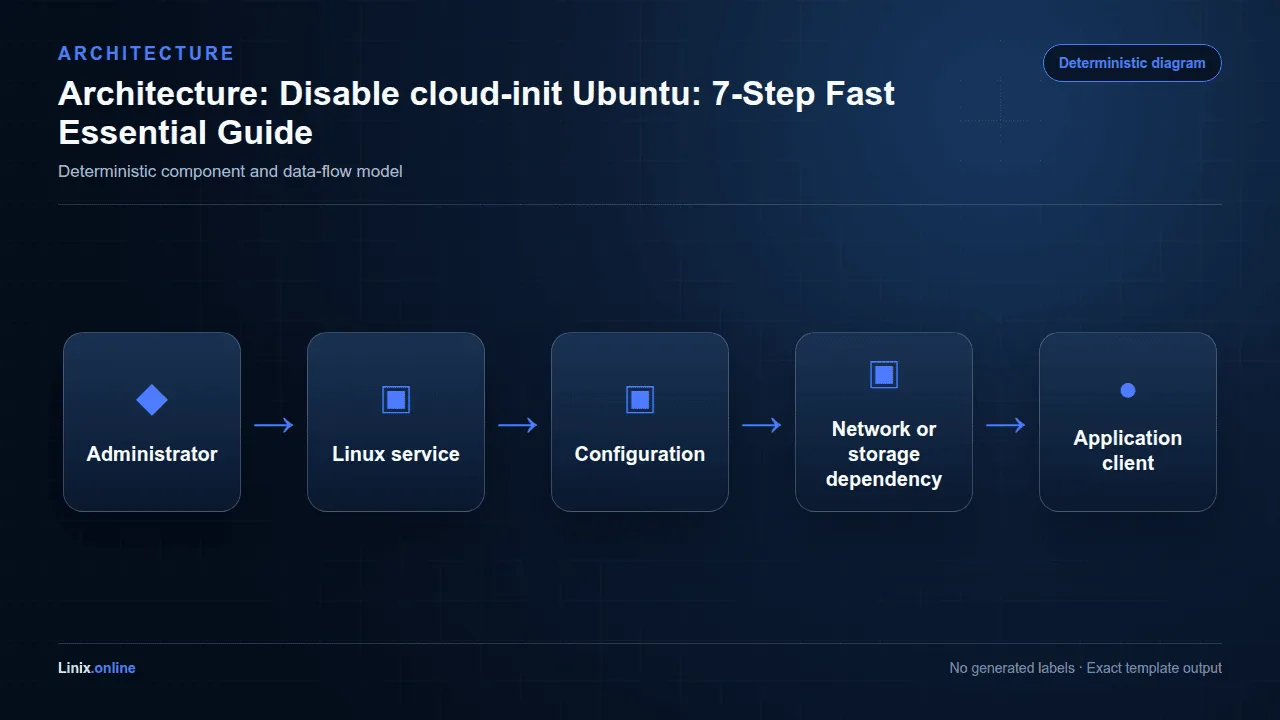
Figure 2. Installation workflow for Disable cloud-init Ubuntu: 7-Step Fast Essential Guide.
Configuration
Disabling Cloud-Init involves two primary steps: stopping the service and preventing it from starting on boot. Additionally, configuration files may need adjustment to eliminate residual settings.
Step 1: Check Cloud-Init Status
Use systemctl to verify if the Cloud-Init service is active:
systemctl status cloud-initThis command checks or changes the systemd service state. Confirm the service reaches the expected active state before continuing.
If the service is running, proceed to stop it.
Step 2: Stop the Service
Execute the following command to halt the Cloud-Init service:
sudo systemctl stop cloud-initReview the command output before continuing, and confirm that it completed without errors.
This action ensures no immediate execution of Cloud-Init tasks.
Step 3: Disable Auto-Start
Prevent Cloud-Init from restarting on reboot with:
sudo systemctl disable cloud-initReview the command output before continuing, and confirm that it completed without errors.
This command modifies the systemd unit file to remove the service from the default boot sequence.
Step 4: Remove Cloud-Init (Optional)
If Cloud-Init is no longer needed, remove it using:
sudo apt remove cloud-initReview the command output before continuing, and confirm that it completed without errors.
However, this is not always recommended, as some system tools may depend on Cloud-Init. Verify dependencies before removal.
Step 5: Audit Configuration Files
Check for any residual configurations in /etc/cloud/cloud.cfg or similar files. Remove or comment out lines that might re-enable Cloud-Init. For example:
sudo nano /etc/cloud/cloud.cfgReview the command output before continuing, and confirm that it completed without errors.
Ensure no entries like cloud-init: or runcmd: are present.
The focus keyword “disable cloud-init Ubuntu” emphasizes the need to align these steps with Ubuntu’s package and service management practices. Verifying package provenance through apt and ensuring least privilege via sudo are critical for security.
Configuration and File Reference
| Item | Purpose |
|---|---|
/etc/disable/ | Configuration or persistent data location to back up and review before changes. |
/var/log/disable/ | Primary log location or log directory used during diagnosis. |
Paths can vary by distribution and installation method. Confirm each path on the target host before editing or automating it.
Upgrade and Maintenance Workflow
Use a staged maintenance process: capture the current version, back up configuration and data, review available packages, apply the update, and complete the same verification checks used after installation.
sudo apt update
sudo apt install --only-upgrade disable
Run upgrade commands during a maintenance window. Review package changes before confirmation, then verify the service, logs, listening ports, and application behavior.
Expert Performance Guidance
Performance changes should follow measurement, not assumptions.
- Measure workload CPU, memory, storage latency, network throughput, and contention before tuning.
- Keep capacity headroom for failure, maintenance, and migration.
- Measure CPU steal or contention, memory pressure, storage latency, and network throughput.
- Prefer virtio or paravirtualized devices where applicable and supported.
- Measure boot time, memory pressure, disk latency, and service startup before changing kernel or sysctl settings.
- Keep /boot and root filesystem capacity monitored before large upgrades.
Monitor the signals that prove whether the change helped or introduced risk.
- Monitor host CPU, memory pressure, storage latency, network errors, guest health, and capacity headroom.
- Alert on failed jobs, stale backups, snapshot age, pool exhaustion, and cluster quorum risk.
- Monitor failed systemd units, pending reboots, disk space, and security updates.
Expert Decision Tables
Virtualization Core Deployment Choice
| Option | Strength | Trade-off | Best fit |
|---|---|---|---|
| Default | Broad compatibility | Fewer advanced controls | General deployments |
| Performance-oriented | Lower overhead | More host-specific tuning | Production workloads |
| High-availability | Resilience | Operational complexity | Critical services |
Virtualization Core Resource Strategy
| Resource | Conservative | Balanced | Performance |
|---|---|---|---|
| CPU | Reserved | Moderate overcommit | Pinned/NUMA aware |
| Memory | Reserved | Ballooning with limits | HugePages where justified |
| Storage | Thick provisioned | Thin with monitoring | Dedicated low-latency path |
Snapshot, Backup, and Replication
| Mechanism | Purpose | Limitation |
|---|---|---|
| Snapshot | Short-term rollback | Not an independent backup |
| Backup | Independent recovery copy | Requires restore validation |
| Replication | Availability and RPO | Does not replace historical backup |
Virtualization Deployment Checklist
Virtualization Core Production Deployment Checklist
- Verify hardware and firmware support
- Record current configuration
- Validate management access and recovery path
- Confirm network and firewall design
- Confirm storage capacity and backup destination
- Apply resource reservations and limits
- Enable monitoring and alerts
- Perform a test restore or rebuild
Virtualization Capacity Planning
Virtualization Core Capacity Planning Guide
- Measure peak vCPU demand and oversubscription
- Measure resident and reclaimable memory
- Measure storage IOPS, throughput, and latency
- Measure network throughput and packet rate
- Reserve headroom for maintenance and failure
- Forecast image, snapshot, log, and backup growth
Keep the final Disable cloud-init Ubuntu configuration in version control and document every production-specific deviation.
Review Disable cloud-init Ubuntu settings after major package or operating-system upgrades because defaults can change.

Figure 3. Configuration map for Disable cloud-init Ubuntu: 7-Step Fast Essential Guide.
Verification
For upstream details and current platform guidance, consult the Ubuntu Server documentation.
Successful disabling of Cloud-Init must be confirmed through observable evidence.
Check Service Status
Run:
systemctl status cloud-initReview the command output before continuing, and confirm that it completed without errors.
The output should indicate the service is inactive and not enabled.
Review Logs
Examine system logs for any Cloud-Init activity:
journalctl -u cloud-initReview the command output before continuing, and confirm that it completed without errors.
No recent logs should appear.
Test Boot Process
Reboot the server and observe if Cloud-Init tasks are executed. If none occur, the disabling was successful.
These verification steps align with the semantic concept of “system services” and “logs,” providing concrete evidence of the process’s success. The focus keyword “disable cloud-init Ubuntu” is reinforced through the use of Ubuntu-specific tools like systemctl and journalctl.
A complete Disable cloud-init Ubuntu verification should cover the version, service state, logs, listening ports, and application response.
Save the successful Disable cloud-init Ubuntu validation output as a baseline for later incident comparison.
Troubleshooting
Common failure modes and their solutions include:
Service Refuses to Stop
If systemctl stop cloud-init fails, check for dependencies:
systemctl list-dependencies cloud-initThis command checks or changes the systemd service state. Confirm the service reaches the expected active state before continuing.
Stop dependent services first or adjust their configurations.
Service Restarts Automatically
If Cloud-Init restarts after disabling, review /etc/cloud/cloud.cfg for auto-start triggers.
Configuration Files Revert
Ensure no scripts or cron jobs re-enable Cloud-Init. Use crontab -l to check for scheduled tasks.
Package Reinstallation
If Cloud-Init reappears, verify that apt is not pulling from an untrusted repository. Use apt sources --all to confirm repository integrity.
The focus keyword “disable cloud-init Ubuntu” implies that troubleshooting must use Ubuntu-specific commands and repositories. Addressing “package provenance” and “system services” ensures the resolution is aligned with Ubuntu’s ecosystem.
Logs and Diagnostic Commands
When the service behaves unexpectedly, collect evidence before changing configuration. The following commands establish the installed version, service state, recent errors, and application-level health.
disable --version
systemctl status disable --no-pager
journalctl -u disable -n 100 --no-pager
journalctl -u disable --since '30 minutes ago'
systemctl status disable --no-pager
Save the relevant output with timestamps. Compare the first error with later secondary failures, because the earliest failure usually identifies the root cause.
Rollback and Uninstall Strategy
A rollback should restore both configuration and compatible application data. Do not remove data directories until backups have been verified and the retention decision is documented.
sudo cp -a /etc/disable /etc/disable.backup
sudo systemctl restart disable
sudo apt remove disable
Package removal does not always delete configuration or persistent data. Inspect the package manager output, verify backups, and confirm whether a purge is appropriate before deleting retained files.
Automation and Routine Health Checks
Automate read-only health checks before automating changes. A scheduled check should report a failure without repeatedly restarting services or hiding the original error.
systemctl is-active disable
journalctl -u disable -n 20 --no-pager
For fleet management, place the same checks in Ansible, a monitoring agent, or a systemd timer. Keep credentials outside scripts and make maintenance jobs idempotent.
Common Production Failure Modes
| Expert concern | Operational guidance |
|---|---|
| Hardware virtualization unavailable | Firmware virtualization extensions are disabled, hidden, unsupported, or already consumed by another hypervisor. |
| Guest will not start | Invalid definition, missing storage, insufficient resources, permissions, or unavailable devices block startup. |
| Virtual network unreachable | Bridge, NAT, VLAN, firewall, MTU, DHCP, or DNS configuration is incomplete. |
| Storage latency is high | Host I/O saturation, unsuitable image format, cache mode, thin-pool pressure, or backend latency affects guests. |
| Snapshot chain is unhealthy | Long snapshot chains, low free space, interrupted merge, or inconsistent guest state causes risk. |
| Provisioning did not complete | Cloud-init datasource, metadata, user-data syntax, network, or first-boot state failed. |
| Host capacity exhausted | CPU overcommit, memory pressure, thin provisioning, or descriptor limits exceed safe headroom. |
| Backup restore fails | Backup is incomplete, encrypted keys are missing, versions are incompatible, or restore was never tested. |
| Repository drift | PPAs can replace distribution packages and block upgrades. |
| Kernel regression | A new kernel may fail with storage, network, or DKMS modules. |
| Partial dpkg transaction | Interrupted package operations can leave packages unconfigured. |
Structured Troubleshooting Playbook
Hardware virtualization unavailable
Symptoms:
- Hardware virtualization unavailable prevents reliable virtualization, provisioning, networking, or storage operation.
Likely causes:
- Firmware virtualization extensions are disabled, hidden, unsupported, or already consumed by another hypervisor.
Diagnosis:
lscpu | grep -i virtualization
egrep -c "(vmx|svm)" /proc/cpuinfo
dmesg | grep -i kvm
Run these checks in order and preserve the first relevant error before making changes.
Resolution:
- Enable VT-x/AMD-V in firmware, confirm host support, and remove conflicting hypervisors.
Verification:
- Repeat the original operation and verify guest state, logs, network reachability, storage health, and monitoring signals.
Guest will not start
Symptoms:
- Guest will not start prevents reliable virtualization, provisioning, networking, or storage operation.
Likely causes:
- Invalid definition, missing storage, insufficient resources, permissions, or unavailable devices block startup.
Diagnosis:
systemctl status libvirtd --no-pager
virsh list --all
journalctl -xe --no-pager | tail -100
Resolution:
- Correct the earliest definition, storage, permission, or resource error and retry with a validated configuration.
Verification:
- Repeat the original operation and verify guest state, logs, network reachability, storage health, and monitoring signals.
Virtual network unreachable
Symptoms:
- Virtual network unreachable prevents reliable virtualization, provisioning, networking, or storage operation.
Likely causes:
- Bridge, NAT, VLAN, firewall, MTU, DHCP, or DNS configuration is incomplete.
Diagnosis:
ip -br link
ip route
bridge link
nft list ruleset
Resolution:
- Correct the network path and verify both host and guest directions.
Verification:
- Repeat the original operation and verify guest state, logs, network reachability, storage health, and monitoring signals.
Storage latency is high
Symptoms:
- Storage latency is high prevents reliable virtualization, provisioning, networking, or storage operation.
Likely causes:
- Host I/O saturation, unsuitable image format, cache mode, thin-pool pressure, or backend latency affects guests.
Diagnosis:
iostat -xz 1 3
df -h
lvs -a
zpool status 2>/dev/null || true
Resolution:
- Relieve backend pressure, restore capacity headroom, and tune only after measuring the workload.
Verification:
- Repeat the original operation and verify guest state, logs, network reachability, storage health, and monitoring signals.
Snapshot chain is unhealthy
Symptoms:
- Snapshot chain is unhealthy prevents reliable virtualization, provisioning, networking, or storage operation.
Likely causes:
- Long snapshot chains, low free space, interrupted merge, or inconsistent guest state causes risk.
Diagnosis:
qemu-img info --backing-chain IMAGE 2>/dev/null || true
df -h
virsh snapshot-list GUEST 2>/dev/null || true
Resolution:
- Back up independently, consolidate safely during a maintenance window, and verify the resulting image.
Verification:
- Repeat the original operation and verify guest state, logs, network reachability, storage health, and monitoring signals.
When diagnosing the service environment, capture the earliest error before restarting services or changing configuration.
Compare a failed the Linux setup host with a known-good configuration to identify drift quickly.
Security Best Practices
Disabling Cloud-Init safely requires adherence to security principles: Least Privilege Always use sudo instead of root access. Avoid running commands as root unless absolutely necessary. Auditability Log all actions using journalctl or sudo auditctl. Ensure changes to configuration files are tracked. Package Integrity Verify that Cloud-Init was installed from a trusted repository. Use apt list --installed | grep cloud-init to confirm the package source.
Secret Handling Avoid storing sensitive information (e.g., API keys) in Cloud-Init configurations. Remove any such entries during the disabling process. These practices address the semantic concepts of “least privilege,” “package provenance,” and “auditability.” The focus keyword “the procedure” is contextualized within Ubuntu’s security framework, ensuring compliance with best practices.
Production Readiness Checklist
- Back up configuration and application data before changes.
- Validate configuration before restarting or reloading the service.
- Monitor logs, disk usage, resource consumption, and service availability.
- Document rollback steps and test them outside production.
Record the tested version, configuration checksum, backup location, validation commands, and rollback owner in the change record before production rollout.
Expert Hardening Guidance
Apply controls in layers and verify that security changes do not break required service behavior.
- Use least privilege, private management networks, signed images, protected metadata, and audited changes.
- Verify firewall and isolation boundaries after networking changes.
- Keep management access private and audited.
- Use signed or trusted images, protected metadata, least privilege, segmentation, and tested recovery.
- Use unattended-upgrades with monitoring and an explicit reboot policy.
- Prefer AppArmor profiles, least-privilege sudo rules, and minimal exposed services.
Production Best Practices
- Verify hardware and firmware prerequisites.
- Separate snapshots from independent backups.
- Use declarative definitions and immutable templates.
- Monitor host and guest saturation.
- Test restores and migrations.
- Document ownership of bridges, pools, and images.
- Keep management interfaces private.
- Use resource limits and reservations.
- Validate time synchronization.
- Maintain rollback procedures.
Avoid these common operational anti-patterns.
- Do not treat snapshots as backups.
- Do not assume nested virtualization or passthrough support without verification.
- Do not expose management interfaces publicly without strong controls.
- Do not mix multiple repositories for the same core package without pinning.
Expert Recovery Strategy
Recovery planning must cover configuration, persistent state, dependencies, and the order in which services return.
- Keep declarative definitions, metadata, and a tested rollback path.
- Restore from independent backups rather than relying on snapshots alone.
- Recover management, storage, networking, and workloads in dependency order.
- Retain previous kernels and console access.
- Save package selections, APT sources, and configuration backups before high-risk changes.
Automate repeatable checks and changes without hiding failures.
- Validate definitions before applying changes.
- Use idempotent provisioning and post-deployment health checks.
- Use cloud-init or Ansible for repeatable host configuration.
Expert FAQ
What does Virtualization Core provide?
Virtualization Core supplies reusable production guidance for architecture, lifecycle, capacity, security, monitoring, and recovery.
Are snapshots backups in Virtualization Core?
No. Snapshots are short-term rollback mechanisms tied to the original storage. Maintain independent, tested backups.
How should capacity be planned for Virtualization Core?
Measure peak and steady-state CPU, memory, storage latency, throughput, network demand, growth, and failure headroom.
Is nested virtualization always available with Virtualization Core?
No. It depends on hardware, firmware, host configuration, cloud policy, and the outer hypervisor.
How should changes be deployed with Virtualization Core?
Validate definitions, preserve rollback, stage changes, verify externally, and monitor resource and error signals.
What should be monitored for Virtualization Core?
Monitor availability, job failures, CPU, memory pressure, storage latency, network errors, capacity, backups, and recovery readiness.
Related Technologies
- hypervisor-core
- virtual-networking-core
- virtual-storage-core
- cloud-init
- multipass
- proxmox
Frequently Asked Questions
What should I verify after this configuration?
Confirm the service, version, logs, network access, and security settings described above.
What is Cloud-Init, and why should I disable it on a persistent server?
Cloud-Init is a tool for automating initial setup in cloud environments. On a persistent server, it can cause unnecessary resource usage or unintended configurations. Disabling it ensures the server remains stable and secure.
Can I re-enable Cloud-Init after disabling it?
Yes, by running sudo systemctl enable cloud-init and sudo systemctl start cloud-init. However, this is not recommended unless necessary, as it reintroduces potential risks.
Will disabling Cloud-Init affect other services?
It depends on the server’s configuration. Some tools or scripts may rely on Cloud-Init. Review dependencies before disabling.
How do I verify that Cloud-Init is fully disabled?
Check the service status with systemctl status cloud-init and review logs with journalctl -u cloud-init. No active processes or logs should indicate Cloud-Init activity.
Is it safe to remove Cloud-Init entirely?
Removing Cloud-Init is safe if no other services depend on it. However, Ubuntu’s base system may include it, so proceed with caution and verify dependencies first.
Conclusion
Disabling Cloud-Init on a persistent Ubuntu server requires careful execution to avoid disrupting critical services. By following the steps outlined—stopping the service, disabling auto-start, and auditing configurations—you can ensure a safe and secure environment. The focus keyword “the deployment” underscores the importance of Ubuntu-specific tools and practices. Always verify the process through observable evidence and adhere to security best practices to maintain system integrity. This guide provides a structured approach to achieving a stable, Cloud-Init-free server while addressing key semantic concepts like package provenance, system services, and least privilege.
Related Tutorials
Need help? If you run into issues while following this guide, leave a comment with the command output and your Linux version.